Mechanical unscrewing puzzles with tactile physics on Android devices
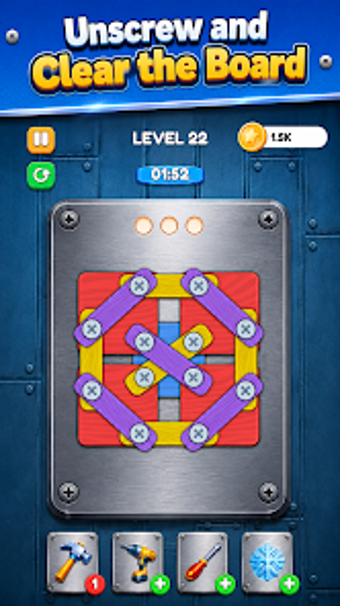
BoltOra: Unscrew Puzzle, from BoltOra Studio, is a mobile logic puzzle aimed at dismantling mechanical structures to train spatial reasoning. The app tasks players with removing screws, nuts, and bolts in precise sequences to clear plates and solve layered problems across levels. It highlights physics-driven interactions, time-based challenges, boosters, and offline play for uninterrupted sessions. Puzzle enthusiasts and casual players seeking focused brain-training and short challenge runs are the primary audience.
What kind of puzzle experience does it offer?
The app is a logic puzzle built around dismantling layered mechanical boards. Players remove screws, nuts, and bolts in ordered steps to free plates; this creates a deliberate problem-solving loop that rewards spatial reasoning. The core loop mixes slow, contemplative planning with occasional urgency from timed stages, making the experience suitable for short sessions or concentrated puzzle runs.
How do mechanics and challenge systems affect play?
Physics-based interactions determine outcomes: plates drop and shift after fasteners are removed, so sequence matters. The app uses tap controls for the unscrewing gesture and includes powerful boosters and in-level hints to unblock players. Boosters can shortcut intricate, multi-step solutions, which alters strategy; hints encourage recovery rather than brute force. Time-based stages require quicker decisions, and offline play keeps the puzzles available without connectivity.
What does the game look and sound like?
The boards use bright, mechanical visuals that make components easy to parse at a glance. Smooth animations emphasize physical responses, contributing to the app's ASMR-like feedback when screws turn or plates settle. Audio design focuses on satisfying mechanical clicks and gentle impacts rather than melodic themes. The interface keeps actions simple, with tap controls mapped clearly to objects on screen.
How long does it stay engaging and who should play it?
With hundreds of levels and a progressive difficulty curve, the app offers a long chain of puzzles for repeat play. What sustains return sessions are layered solutions and occasional time trials that test speed. Players who prefer mechanical problem-solving over narrative progression get the most value. Compared to titles like The Room, the app emphasizes unscrewing sequences and short challenges rather than environmental storytelling.
In summary: who should play it
The app suits puzzle enthusiasts and casual players who enjoy methodical, mechanical problem-solving and short challenge sessions, reflecting its emphasis on dismantling structures and brain-training exercises. Players seeking story-led campaigns or multiplayer interactions find less alignment with this design. For those who prefer focused logic tests and repeatable puzzles, the experience rewards patience and an eye for order.